
01Problem
Two product systems, one platform
The Koopid acquisition brought a full conversational AI product into a much larger communications platform that already had its own components, navigation, and language for overlapping jobs.
Selected work Case study 03
Integrating conversational AI into a larger product ecosystem
Conversational AI · Product integration
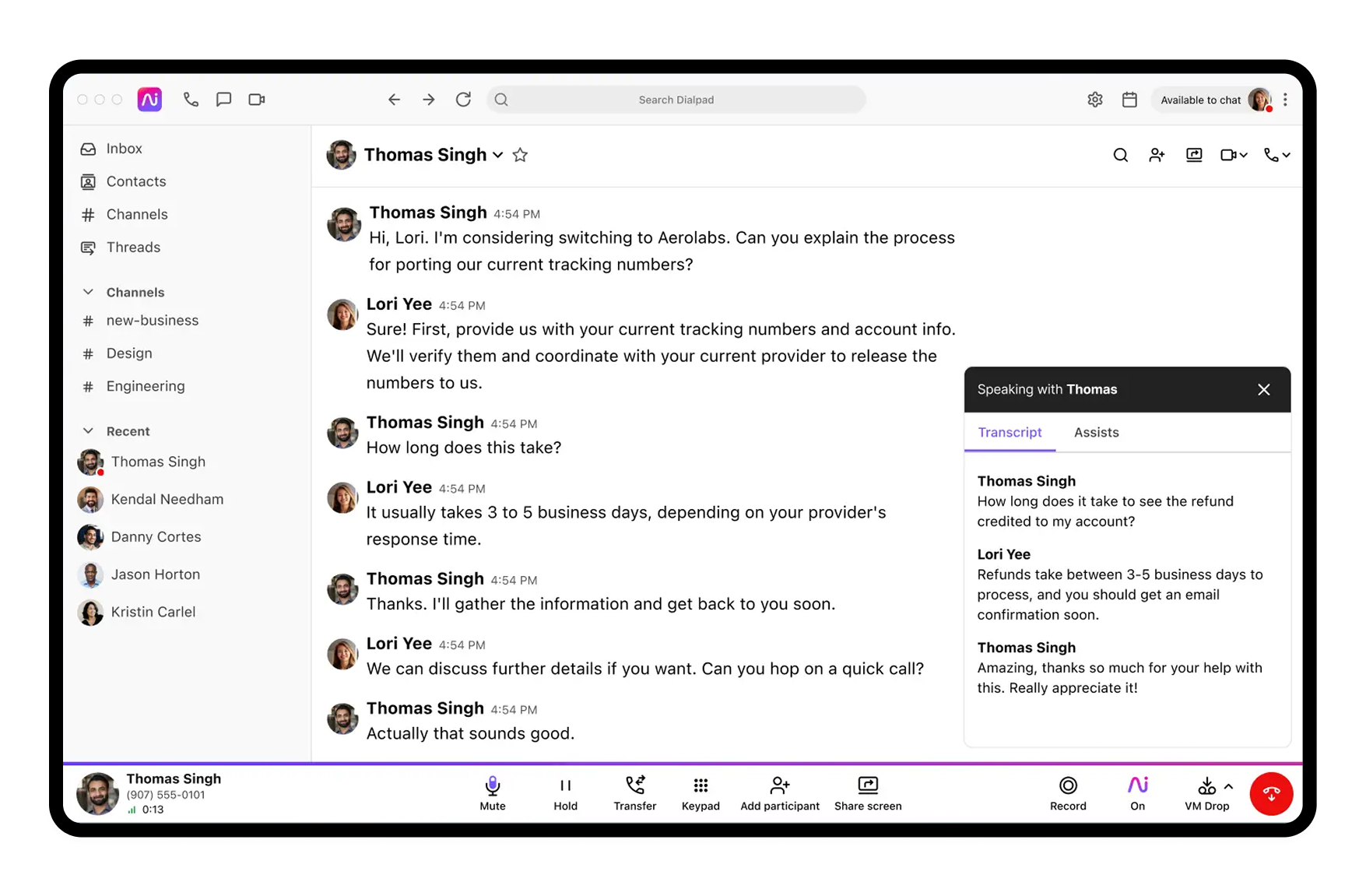
The integrated experience
The problem
01Problem
The Koopid acquisition brought a full conversational AI product into a much larger communications platform that already had its own components, navigation, and language for overlapping jobs.
02Why it mattered
Matching the visual system alone would have quietly changed workflows that existing Koopid customers depended on, while leaving duplicated patterns and no clear owner for the parts that disagreed.
03Solution
A keep, adapt, and retire decision for every pattern, argued from user need and downstream cost, with explicit ownership and review paths across the combined organization.
Case overview
After Dialpad acquired Koopid, I helped migrate its conversational AI workflows into a much larger communications platform. The work required more than visual alignment. We had to preserve essential customer behavior, reduce duplicated patterns, and create clear ownership across teams.
Conversation history remains visible through escalation.
Actions and feedback use Dialpad's established product language.
Automation and live-agent states share one coherent workspace.
Inventory before redesign
I mapped Koopid workflows, Dialpad patterns, technical dependencies, and team ownership before proposing a migration direction. A component could look similar and still behave differently, carry different permissions, or belong to a different product team.
Document the jobs, states, edge cases, and customer dependencies that had to survive the move.
Identify where Dialpad already had an equivalent pattern and where conversational AI introduced a new need.
Name one accountable owner for each meaningful decision, then identify the partners needed for review or implementation.
Migration strategy
The framework gave teams a common way to discuss tradeoffs. Decisions were based on customer value, system fit, technical cost, and future ownership.
01
Preserve workflows and interaction logic that were essential to existing Koopid customers.
02
Translate reusable behavior into Dialpad components, navigation, language, and visual standards.
03
Remove duplicated patterns or technical artifacts that did not earn their cost in the combined product.
Product execution
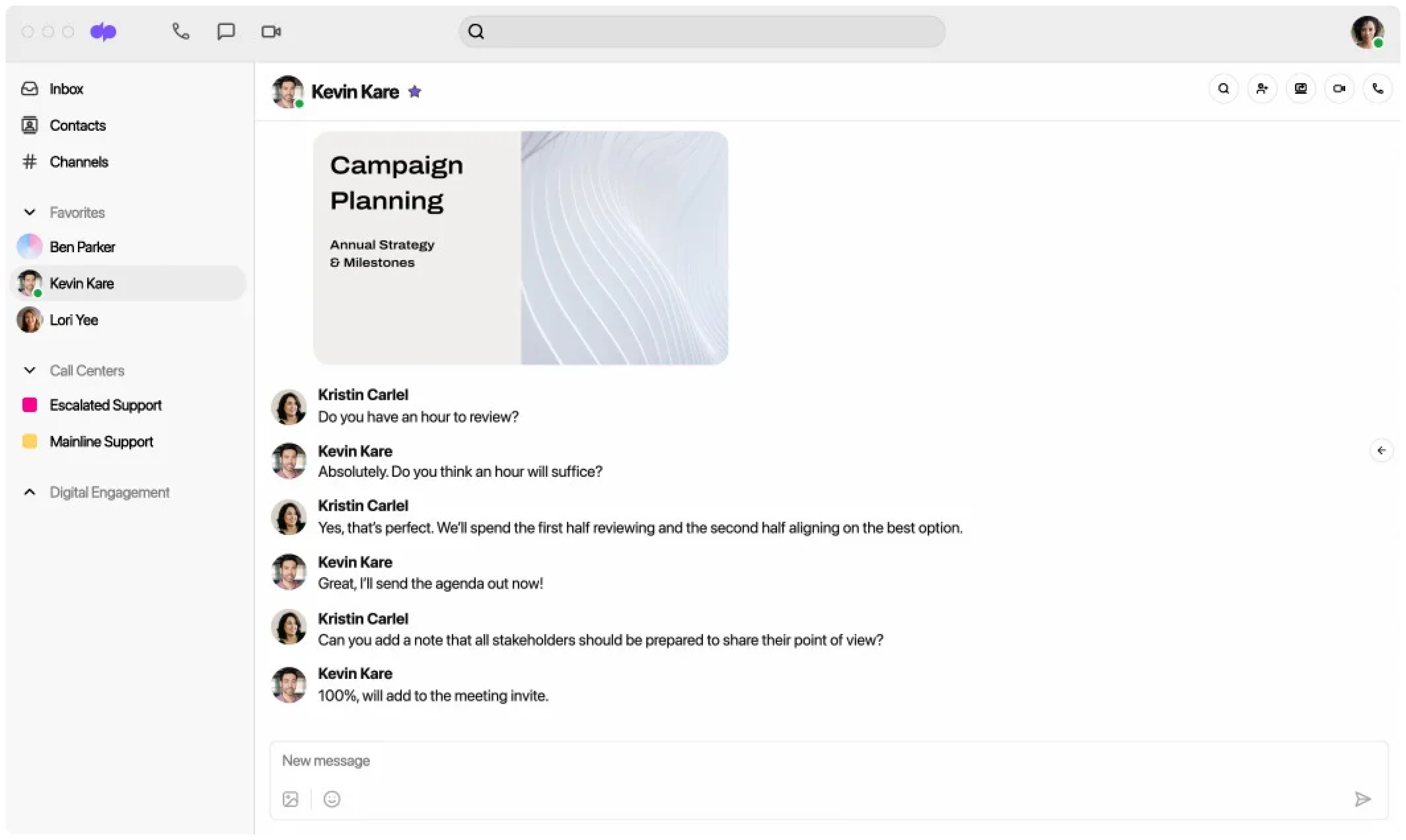
I refactored the design around Dialpad's patterns while protecting conversation context, system feedback, and the handoff between automation and a live agent. New or missing states went through the appropriate product and system reviews.
Keep the history and reason for escalation visible when a conversation moves between AI and a person.
Use familiar Dialpad feedback, controls, and hierarchy so the integrated feature feels native.
Map product states to shared components and reduce one-off code where it did not protect meaningful behavior.
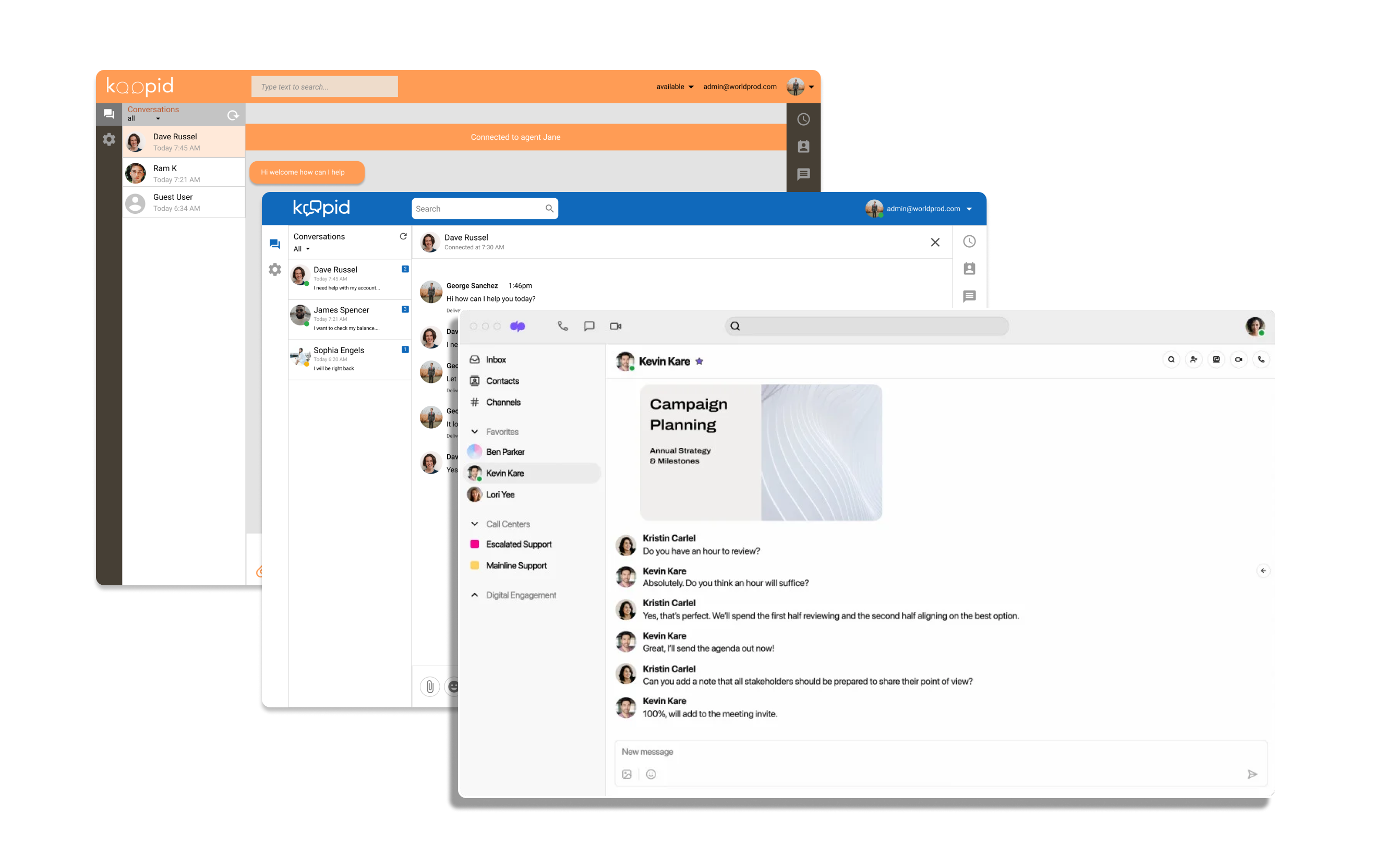
01 · System migration
Migration work balanced the existing workflow with the destination system.
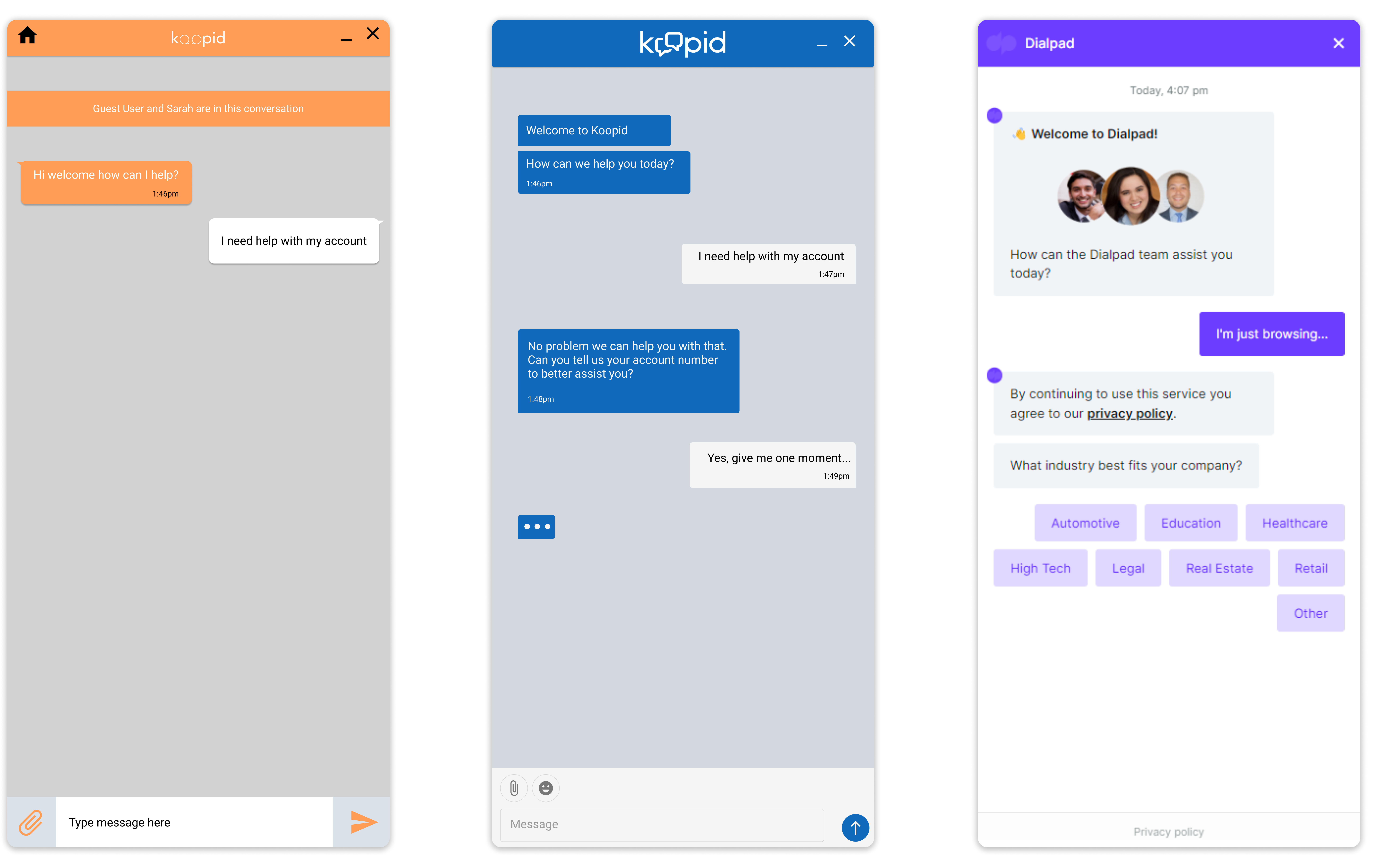
02 · Conversation continuity
Customer-facing automation and agent-side context were considered as one continuous journey, so the handoff retained the context of the conversation.
Cross-team work
At Koopid, I could often resolve a design decision directly with one engineering pod. At Dialpad, the same change could affect multiple surfaces, systems, and roadmaps. I learned to identify the right owner early, bring a concise rationale, and record the decision so teams did not have to reopen it later.
A migration is not successful when the interface looks consistent but the workflow becomes harder for the people already using it.
When systems disagreed, I documented the user need, implementation cost, and downstream consequence instead of arguing from visual preference.
Moving from a single product designer to a large design organization required explicit owners, review paths, and decision records.
Integration work can reveal missing patterns in the larger system. I treated those gaps as an opportunity to strengthen the shared product.
Outcome
The integrated conversational AI workflows reached production inside Dialpad.
Developers could modify the componentized front-end foundation to fit the destination system instead of rebuilding static concepts from scratch.
The migration preserved the conversation context and automation-to-agent behavior existing customers depended on.
I am keeping the result non-numeric because I do not have a defensible public adoption or efficiency metric for the integration.
Reflection
Some Koopid patterns felt essential because the team knew them well. Some Dialpad patterns felt automatically correct because they were established. The useful question was which approach best served the user and could be owned at scale.
If I repeated the work, I would agree on integration success measures with product leadership before the inventory began. That would make later prioritization and outcome reporting more objective.