Selected work Case study 04

Koopid

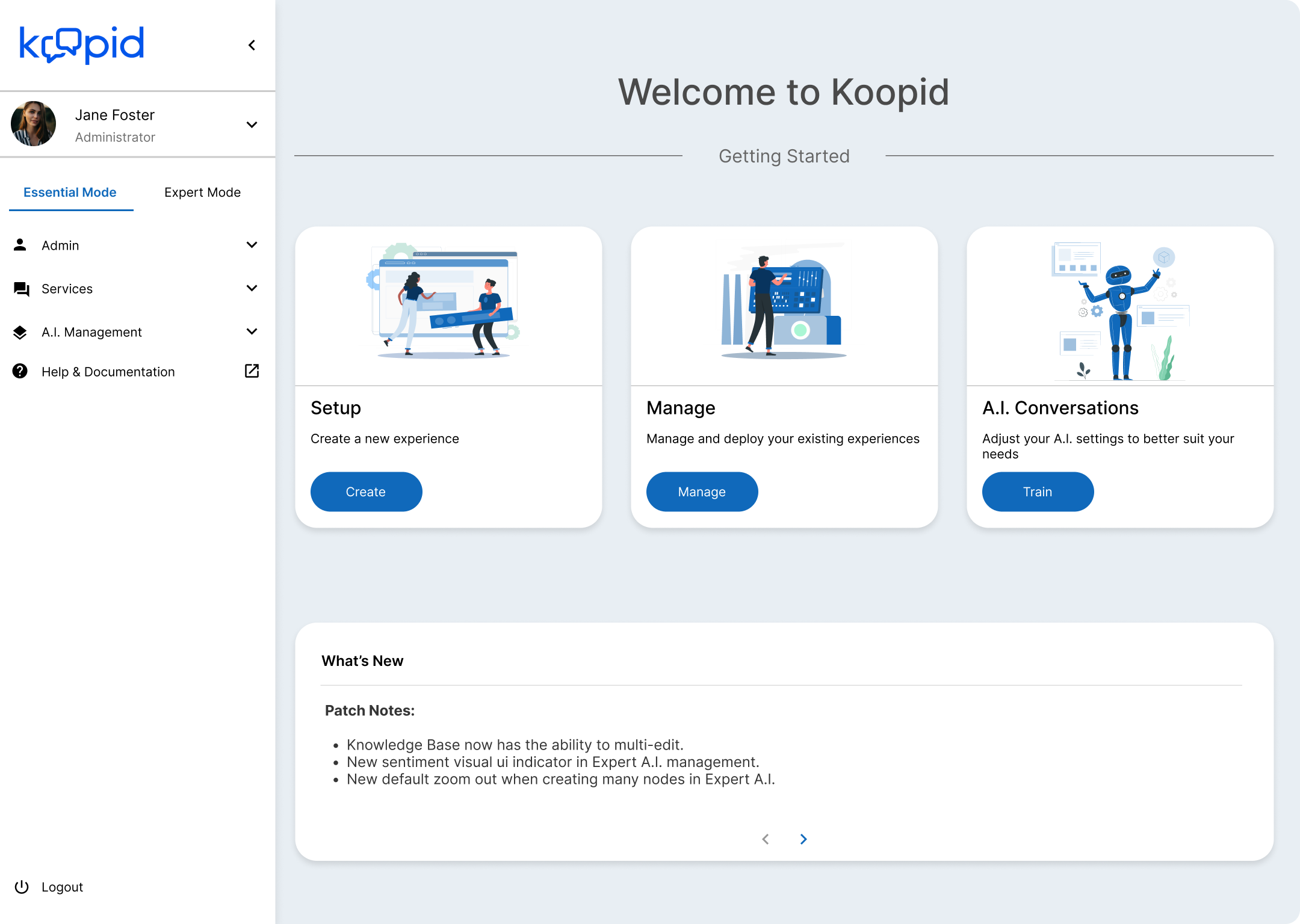
Making a powerful conversational AI platform usable

Conversational AI · Platform design

Two sides of the conversation

Simple for customers. Clear for agents.

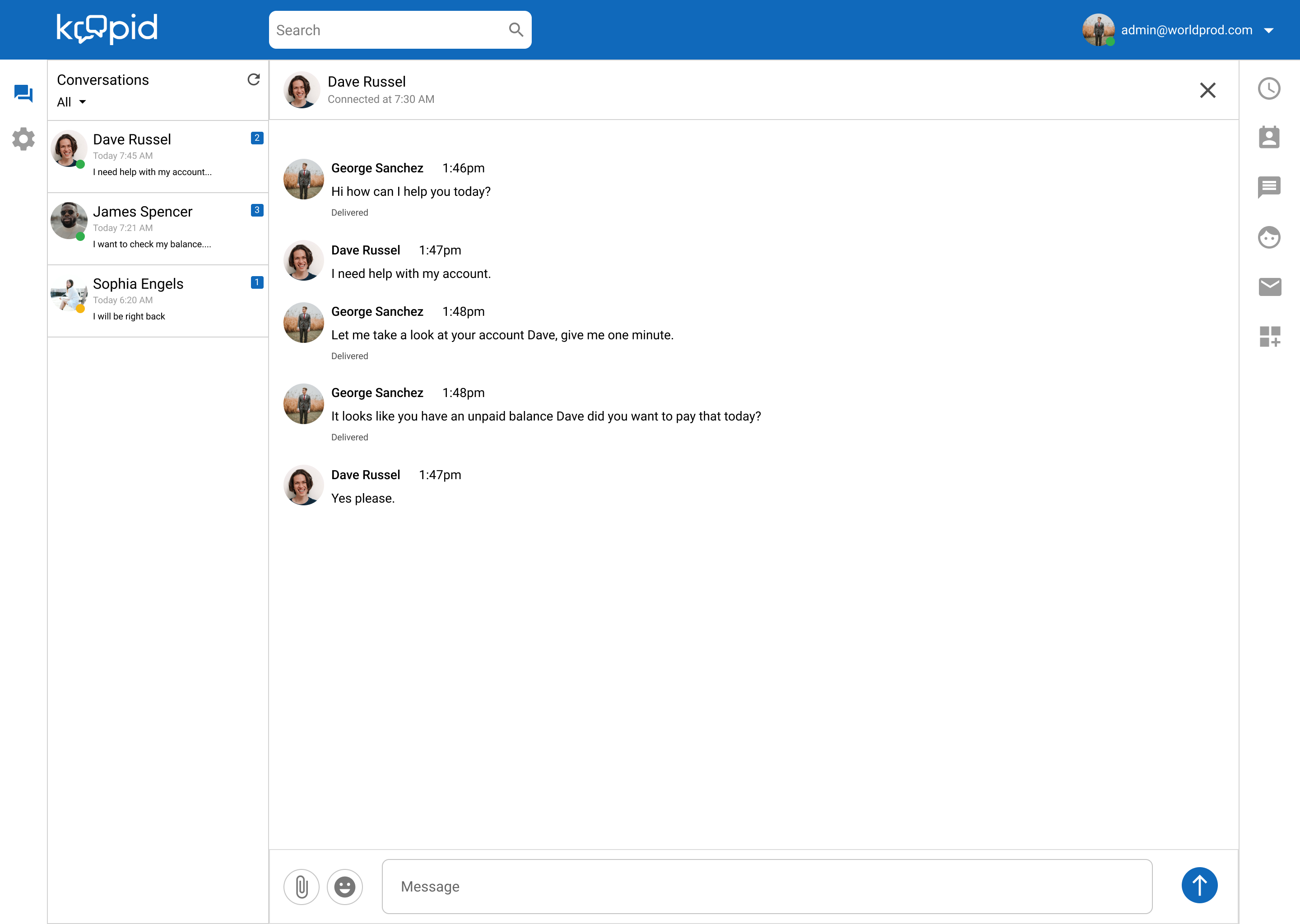
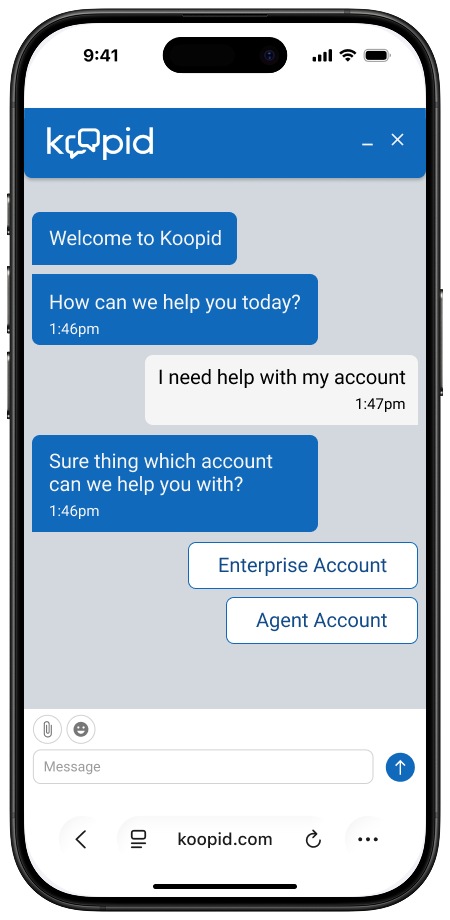
Redesigned Koopid agent desktop showing conversation context and agent actionsKoopid customer chat on a phone with guided responses and live-agent access
The customer conversation and the agent workspace, designed as one connected experience.

The problem

Powerful technology, handed to operators as-is.

01Problem

The interface mirrored the architecture

Koopid could automate customer conversations and hand off to live agents, but the screens were organized around how the platform was built rather than the decisions an administrator, supervisor, or agent was trying to make.
02Why it mattered

Operators had to infer what the system was doing

Conversation state, routing, and escalation were rarely visible, so daily users spent attention reconstructing context instead of resolving the customer in front of them.

03Solution

One system organized by role

Customer automation, the agent desktop, and the admin tools treated as a single service journey, with visible status, role-shaped navigation, and reusable patterns across all three.

Case overview

Built for AI. Redesigned for the people operating it.

Koopid could automate customer conversations and support live-agent escalation, but the interface reflected the complexity of the underlying technology. As the product designer, I created a clearer system across customer conversations, the agent desktop, and administrative tools.

Role
Product Designer and design lead
Company
Koopid
Timeline
2020 to 2021, 13 months
Industry
Conversational AI and contact-center technology
Ownership
Sole product designer accountable for research, product design, system direction, prototyping, and engineering collaboration

Ground-level research

The interface problems were creating operational problems.

I reviewed the product with customer success, engineers, and the people using each role. Three signals kept repeating: customers escalated from automation too early, agents had to interpret unclear states, and interface confusion created avoidable support work.

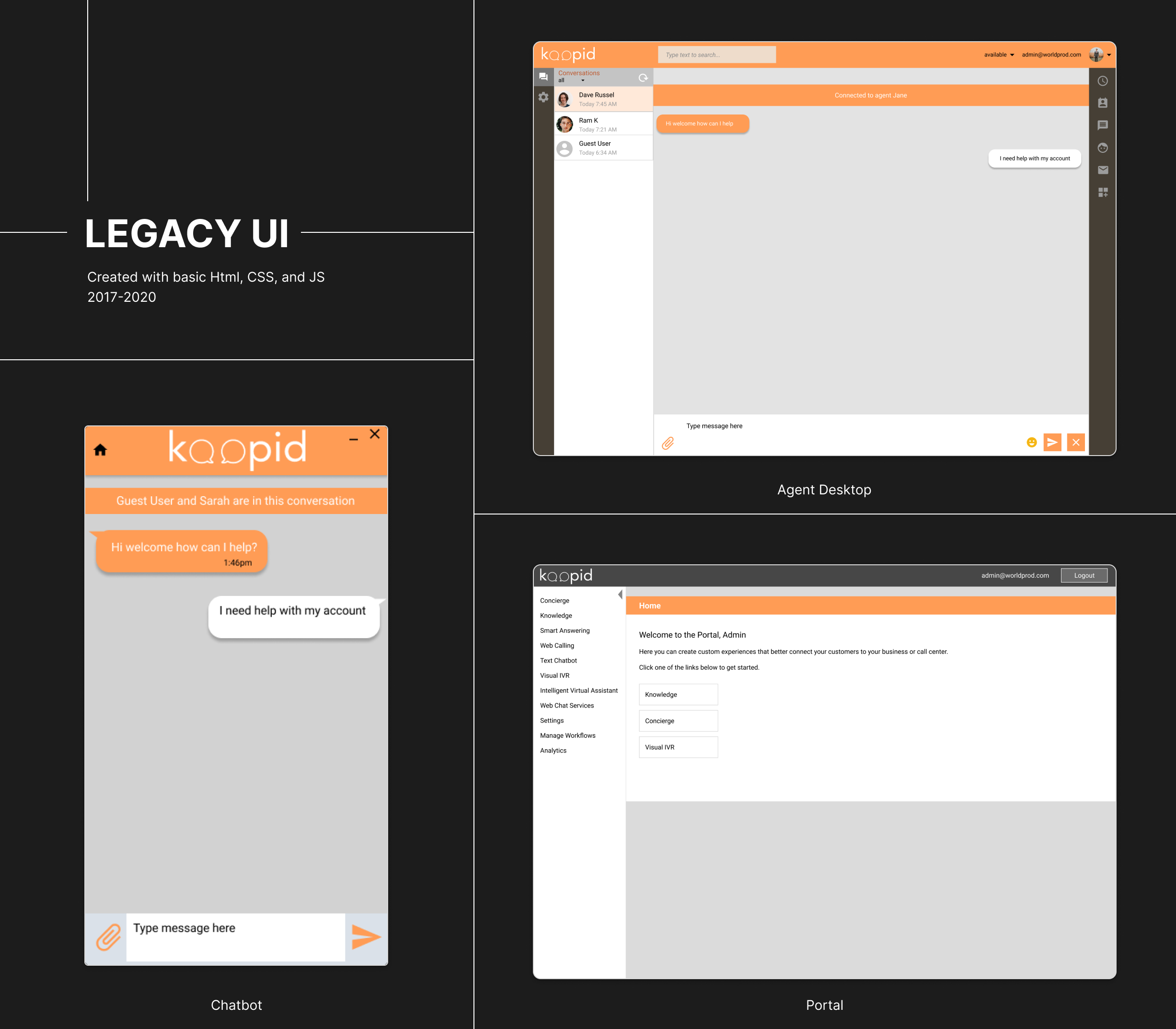
Legacy Koopid chatbot, agent desktop, and administration portal

01 · Interface audit

Powerful tools, difficult to read.

The technical capability was present, but hierarchy and status were difficult to scan across the chatbot, agent desktop, and portal.

  • Dense controls competed with the conversation.
  • System state required interpretation instead of recognition.

02 · Service journey

The friction carried through.

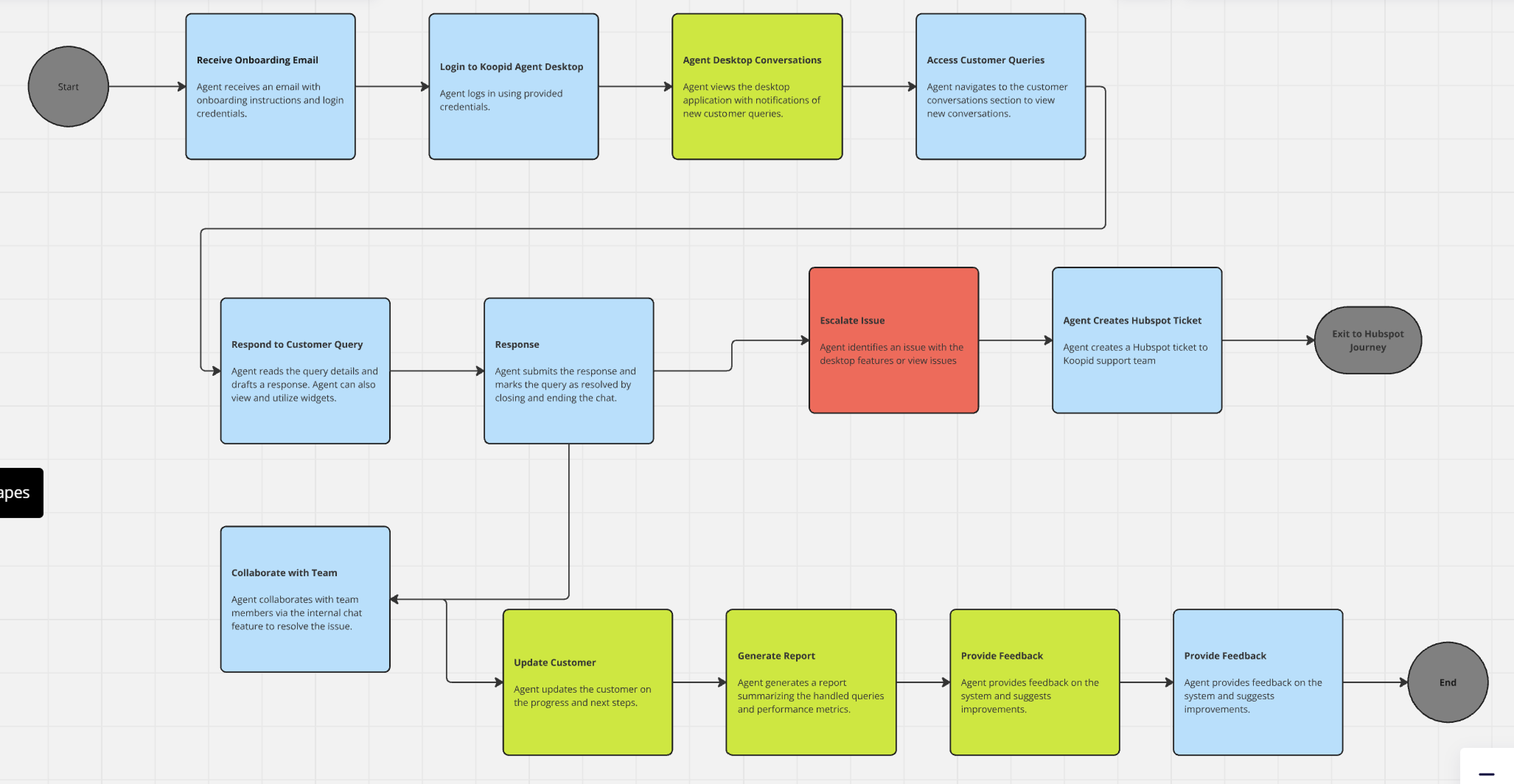
Mapping the complete journey showed how customer-side friction became downstream work for agents and support teams.

Koopid end-to-end conversation journey, from agent onboarding through customer support and escalation

Users and decisions

One platform, three levels of responsibility.

Administrators

Onboarding, configuration, branding, and workflow creation

Administrators needed enough control to configure a customer instance without understanding the platform like the team that built it.

Supervisors

Agent oversight, sentiment review, and conflict resolution

Supervisors used conversation patterns and agent feedback to improve automation while keeping escalations under control.

Agents

Customer conversations and escalation handling

Agents were the primary daily users. Their experience connected the quality of the customer conversation to the quality of the operational tools behind it.

Product direction

Expose what matters. Hide what does not.

The goal was not to make the product look simpler. It was to help each person understand the current state, the next action, and the consequence of that action without absorbing the platform's internal complexity.

Make status visible

Clear conversation state, routing, and escalation cues reduced the need to infer what the system was doing.

Organize by role

Navigation and permissions reflected the different decisions an administrator, supervisor, or agent needed to make.

Connect both sides of the conversation

Customer-facing automation and agent tools were treated as one service journey, not unrelated interfaces.

Create reusable patterns

Shared components established consistency across the agent desktop, admin portal, and future product work.

Koopid administration portal
Administrative tools used consistent hierarchy and shared patterns for configuration.
01

Shared hierarchy makes configuration predictable across roles.

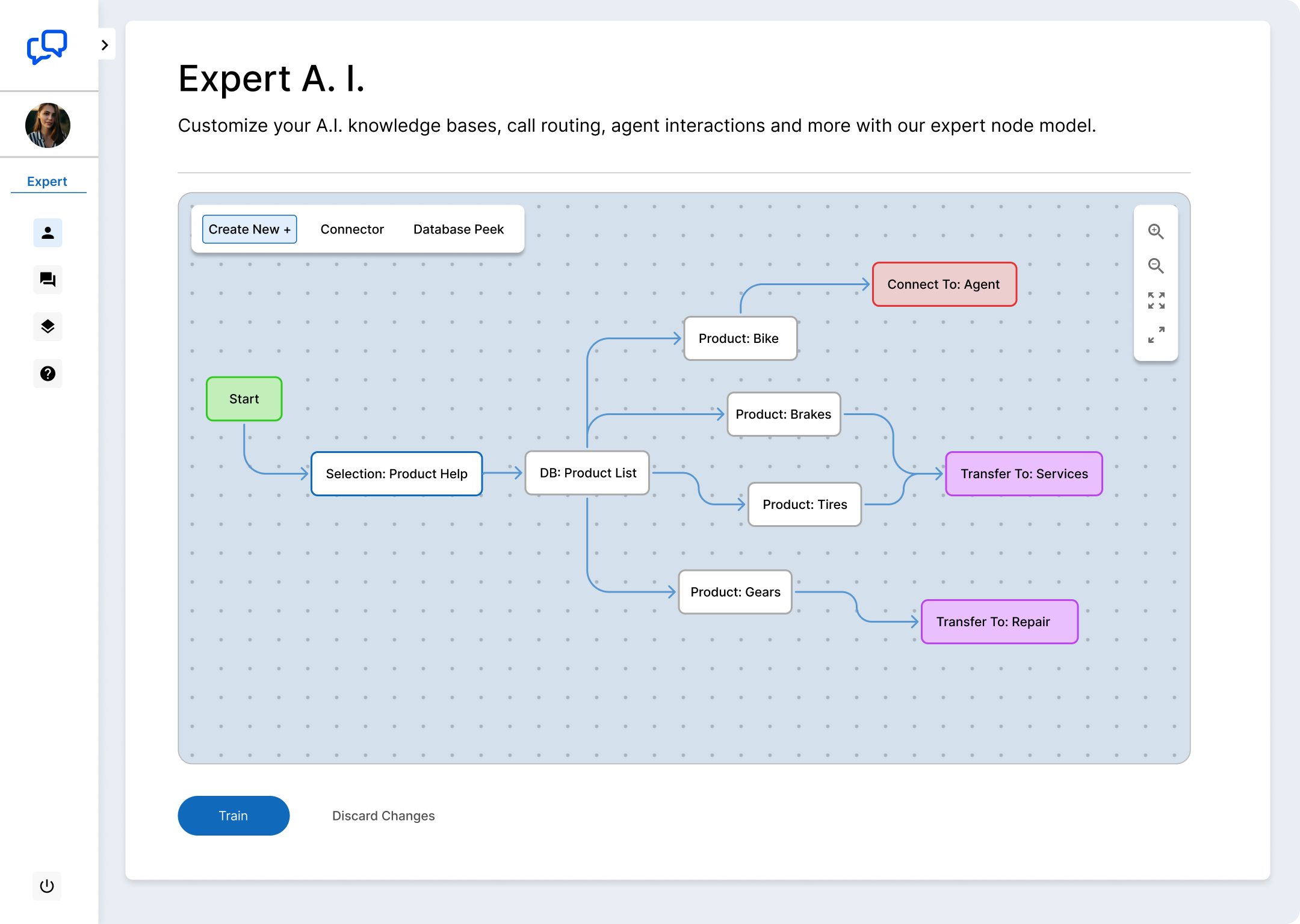
Koopid Expert AI interface
Complex AI configuration was organized around understandable tasks and system feedback.
01

Workflow setup is organized around clear tasks, state, and feedback.

Collaboration and delivery

A shared rhythm across design and distributed engineering.

As the only product designer, I could not become a review gate for every decision. I established reusable patterns, clarified what needed live collaboration, and documented what engineers could carry forward independently. Reviews focused on user impact, technical constraints, and unresolved risk.

Own the ambiguity

I brought structure to ideas arriving from customers, engineering, and leadership, then made the tradeoffs explicit.

Work hard on the constraint

Short feedback loops across time zones kept decisions moving. The unglamorous work of documenting states and ownership prevented avoidable rework.

Raise the system

Reusable interaction and component patterns improved the next feature, not only the screen being redesigned.

Outcome

A shipped platform with evidence beyond the final screens.

Public counts are not available, so the evidence is presented in the form the team could verify.

Enterprise use

The product shipped and supported enterprise contact-center deployments, including Avaya.

Operational improvement

Customer success reported substantially fewer support tickets and configuration errors, while users praised the more intuitive and streamlined workflows.

Implementation leverage

Reusable React components were used throughout the app. The componentized front end was adaptable by developers and designed to support white-label deployments.

Business context

Strong adoption, usability, and product capability strengthened Koopid's position before Dialpad acquired the company in early 2021. The redesign contributed to that product readiness, but it was not the sole cause of the acquisition.

Reflection

Designing both sides of the service changed the quality of the solution.

A choppy automated conversation did not end with the customer. It changed the work arriving at the agent desktop, the supervisor's workload, and the support team's queue. Treating that chain as one experience led to better priorities.

If I repeated the project, I would instrument escalation reasons and time-to-resolution sooner. The qualitative signal was strong, but earlier operational baselines would make the impact easier to isolate.

Next case studyONEflight InternationalAviation operations and booking